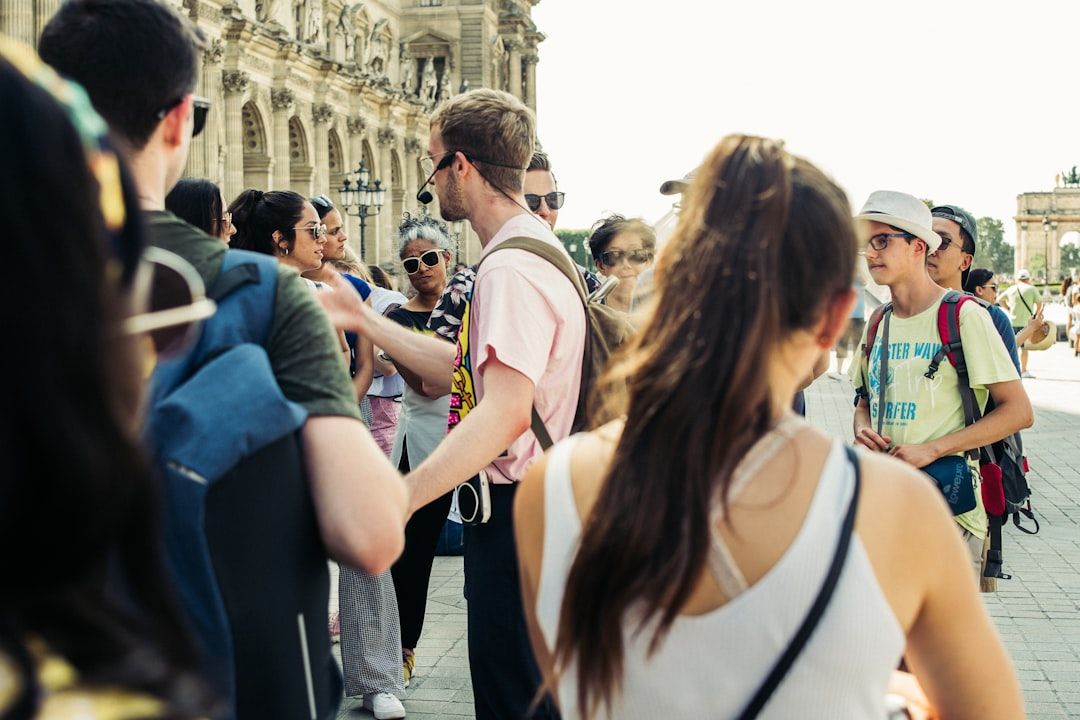
Guided tours in Europe range from genuinely irreplaceable to an expensive way of being told what a plaque says. The distinction is not the destination but which of three conditions the tour meets.
The three conditions
1. Restricted access
The clearest case: places you cannot enter otherwise.
The Real Mary King's Close in Edinburgh. Rome's catacombs. The Colosseum hypogeum. Vatican early access before general opening. Cave systems and glaciers anywhere.
Here the tour is the ticket, and there is no independent version to compare against.
2. Invisible significance
Places where what matters cannot be seen without explanation.
The Roman Forum is a field of fragments. Hagia Sophia's layers of cathedral, mosque, museum and mosque are not legible from the building. A Japanese dry garden's design principles are deliberate and invisible. Berlin's absences — where the Wall ran, what is not there — need pointing out.
An audio guide often does this adequately and costs a tenth as much.
3. Logistics
Getting somewhere that public transport does not reach, or where the arrangement is genuinely complex.
Wine regions where you should not drive. Remote archaeological sites. Multi-stop rural itineraries. Iceland's highlands.
Where tours rarely earn their price
City centre walks in places that are compact and signposted — Amsterdam, Copenhagen, Lisbon, Dublin. Pleasant, and a map and two hours do most of it.
Major art museums. The Prado, the Rijksmuseum, the Uffizi all have excellent labelling and audio guides. A human guide adds narrative rather than access.
Sites reachable by an ordinary train. Versailles, Sintra, Toledo, Montserrat. Tours here mainly sell transport you can buy for a fraction.
Hop-on hop-off buses in cities with functioning public transport, which is most of Europe.
Free walking tours, honestly
They are not free. Tips are the guide's entire income and companies frequently charge guides a fee per participant, so a walkaway costs the guide money.
€10–15 per person is the expected figure in western Europe, less in cheaper countries. Treat it as the price.
At that price they are good value for a first-day orientation. Quality depends on the individual guide, and summer groups can be large enough that hearing becomes the problem.
The skip-the-line question
Genuinely worth paying at a handful of sites: the Vatican Museums, the Sagrada Família, the Alhambra, the Colosseum, the Anne Frank House.
But at most of those, a standard timed-entry ticket booked directly with the site achieves the same thing. Third-party resellers frequently charge a premium for the official timed ticket and describe it as skip-the-line.
Book direct first and check what the site's own timed entry costs before paying a reseller.
A practical test
Before booking, ask: can I get in without this, and would I understand what I am looking at?
Two yeses means walk in yourself. One no means consider it. Two noes means book it.
That single question resolves most European tour decisions and saves a surprising amount of money.